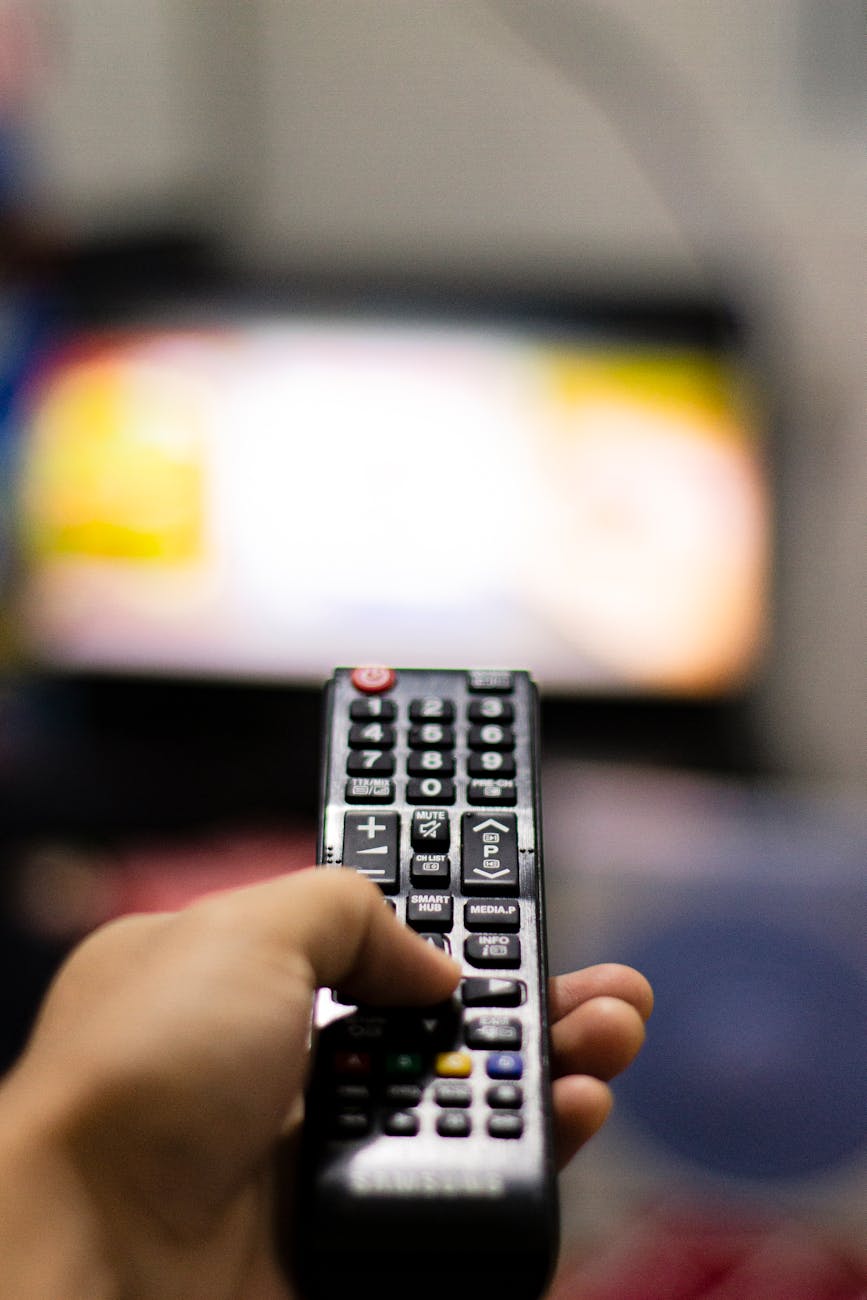
For Gregory Ulmer, television is the institutionalization of video. “Most of the attacks on video as a medium and television as an institution may be seen as examples of the assumptions of alphabetic cognition used as the basis for the condemnation of primal thinking” (p. 90). A representative example of this take that Ulmer discusses at some length is Jerry Mander’s Four Arguments for the Elimination of Television (1978). The spirit of Mander’s Four Arguments is alive and well in the digital age. Contemporary works that may remind one of his polemic: Jaron Lanier’s similarly titled Ten Arguments for Deleting Your Social Media Accounts Right Now (2018), Nicholas Carr’s The Shallows: What the Internet Is Doing to Our Brains (2010) and Jonathan Haidt’s The Anxious Generation: How the Great Rewiring of Childhood Is Causing an Epidemic of Mental Illness (2024).
I am commenting on the revised second edition of Ulmer’s Teletheory (2004), the second book in a philosophical trilogy that began with Applied Grammatology: Post(e)-Pedagogy from Jacques Derrida to Joseph Beuys (1984) and concluded with Heuretics: The Logic of Invention (1994). The first edition of Teletheory came out in 1989 and was subtitled Grammatology in the Age of Video. The subtitle has been dropped from the second edition. The cover of both editions features a sketch by Jacques Derrida for the Parc de la Villette project. The sketch is of a “folie,” or folly in English, “for a sculpture based on the metaphor informing the passage of Plato’s Timaeus that he finds most resistant to interpretation—the chora as crible, sieve or sift” (p. 278, italics in the original). This quote appears the last chapter of Ulmer book, “Derrida at the Little Bighorn,” which serves as an example of what Ulmer calls a “mystory.” Mystory is Ulmer’s neologism, or “puncept,” meaning “the contribution of personal anecdotes to problem-solving in a field of specialized knowledge” (p. 62). Mystory is “a term designating the nexus of history, politics, language, thought, and technology in the last decade of this millennium” (p. 105). One of the objectives of one’s mystory is to have epiphanies or eureka moments (here think of Freud, Kekulé, Einstein) in the classroom; it “brings this process into academic discourse so that it may be artificially developed, democratized, extended to normal schooling for everyday use” (p. 63). In his own mystory, Ulmer uses three different stories from/related to his life as his invention (the first canon of classical rhetoric). I’ll discuss this more in my next weblog post. Ulmer is well known for his term electracy, which does not really make an appearance in Teletheory until the reader gets to the book’s afterward (written for the revised second edition), “After Teletheory.” I shall also explore electracy more in my next post.
What is particularly significant for mystory “is the insight into the circulation through the oral and literate registers of the sense that occurs in the social and psychological development of inventions, epitomized by Freud’s invention of psychoanalysis . . .” (p. 64). Ulmer dubs this “new style of thought” oralysis and states that it is “writable in video” (p. 64). This puncept refers to “the way in which oral forms, derived from everyday life, are, with the recording powers of video, applied to the analytical tasks associated with literate forms” (p. 11). This brings us to the interview as an interesting example of oralysis. Ulmer makes the point that “the interview is one of the predominant forms of our time, both in daily life, the popular media, and specialized research” (p. 117). Here is an example of this I myself discovered. In the entry titled “Postmodern Interviewing” in The SAGE Handbook of Qualitative Research (2005), we learn that “[i]n oralysis, the traditional product of interviewing, talk, is coupled with the visual, providing a product consonant with a society dominated by the medium of television” (p. 710). Here “the topic of inquiry becomes dramatized by the focus on existential moments in peoples’ lives, possibly producing richer and more meaningful data” (pp. 709-710). Similarly, in a chapter called “Showing One’s Sadness in a Visual Context: Providing a Sense of Community and Support for Depressed Women through Video Interviews,” in Women and Depression (2010, edited by Iffat Hussain), Irmeli Laitinen and Elizabeth Ettorre write that “[t]he video work used in this project incorporates narrative interviews and is embedded in what Ulmer (1989) calls oralysis” (p. 2).

 Digital WRTC